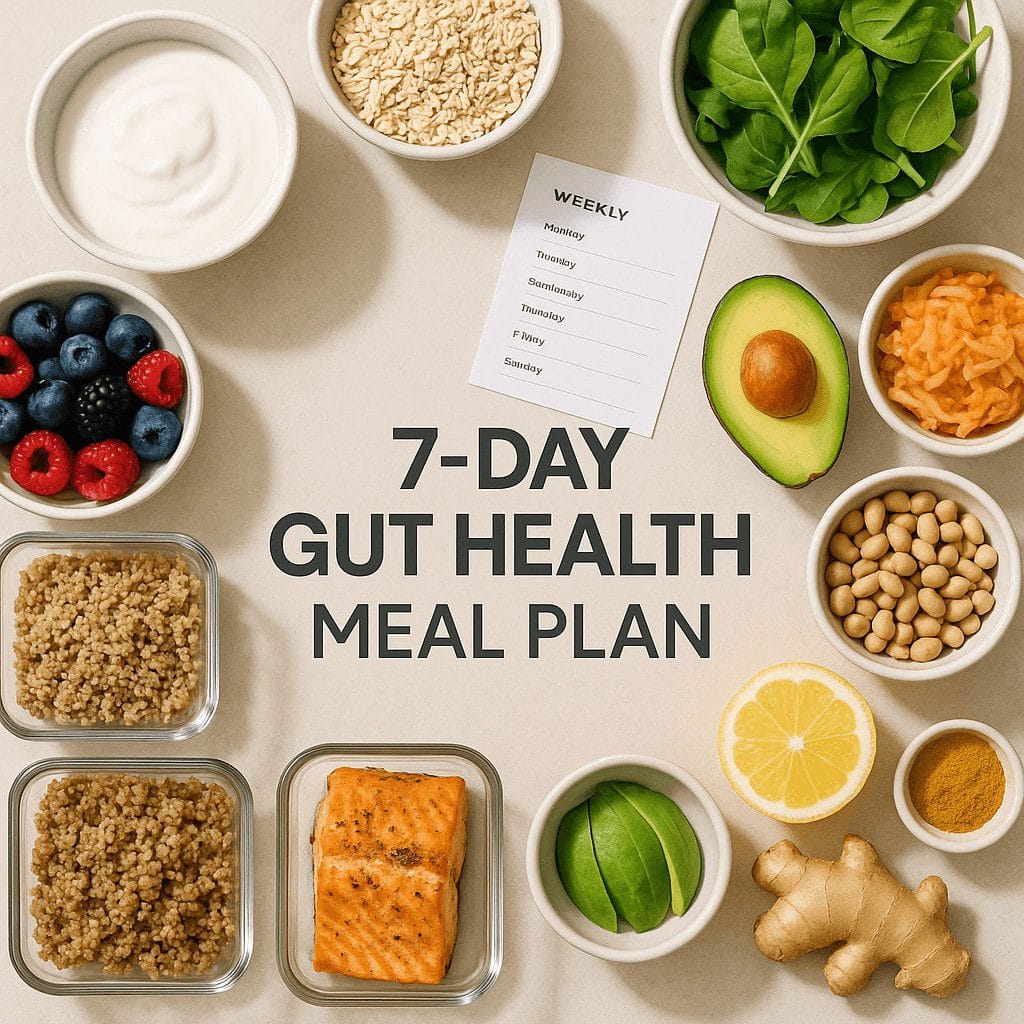
7-Day Gut Health Meal Plan
If your digestion has been feeling “off” lately, more bloating than usual, unpredictable bathroom trips, or that heavy, sluggish feeling after meals, a simple reset can help.
Not a juice cleanse. Not a strict elimination diet.
Before you start, it helps to understand your gut baseline. Read our 7 Signs of an Unhealthy Gut to identify your specific weak spots, and check our Best Diet for Gut Health guide for the science behind food and your microbiome.
Just a week of gut-friendly meals that are easy to digest, rich in fiber (the kind your gut microbes love), and full of real foods that support the gut lining and regularity.
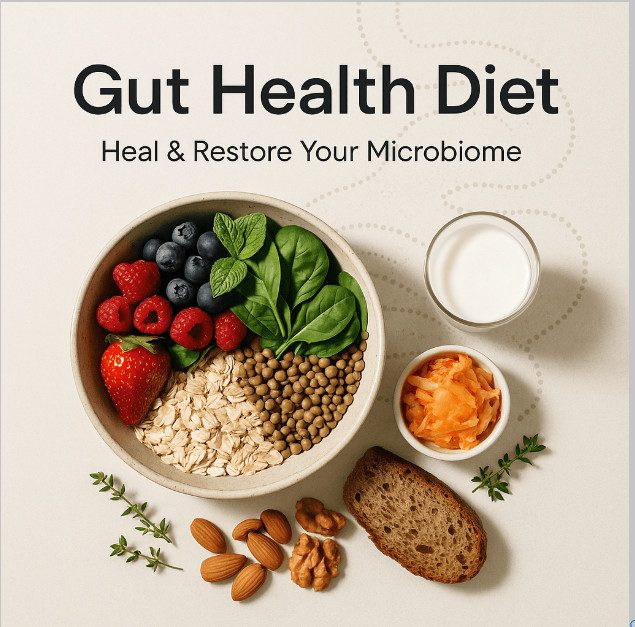
This 7-day gut health meal plan is built around a few core goals:
- Feed your beneficial gut bacteria with a steady variety of plant fibers.
- Support comfortable digestion with gentle cooking methods and simple ingredient lists.
- Include fermented foods in small, consistent amounts (as tolerated).
- Balance blood sugar with protein, healthy fats, and slow-digesting carbs.
- Reduce common gut irritants for many people, especially ultra-processed foods, excessive added sugar, and alcohol.
Important note: If you have IBS, IBD, celiac disease, SIBO, histamine intolerance, or you’re recovering from a flare, you may need adjustments. Use this as a supportive template, and personalize it to your needs.
How to use this plan (so it actually helps)
A meal plan only works if it’s realistic. Here’s the simplest way to approach this:
- Eat slowly and stop at “comfortably full.” Overeating is a common trigger for bloating.
- Hydrate consistently, especially if you’re increasing fiber.
- Start small with fermented foods (a few tablespoons), and increase only if you feel good.
- Cook more often than you eat raw this week. Cooked foods are usually easier on digestion.
- Repeat meals if you want. Variety is great, but consistency is sometimes even better for symptoms.
Your gut-friendly grocery list (use as a checklist)
You don’t need every item here. Pick what you like and what you tolerate.
Fiber and slow carbs
- Oats (rolled or steel-cut)
- Brown rice or quinoa
- Sweet potatoes
- Whole grain bread or sourdough (if tolerated)
- Lentils or chickpeas (canned is fine, rinse well)
- Chia seeds or ground flaxseed
Proteins
- Eggs
- Plain Greek yogurt or kefir (or dairy-free alternatives with live cultures)
- Chicken, turkey, salmon, sardines, tofu, tempeh
- Cottage cheese (if tolerated)
Gut-friendly veggies (great cooked)
- Carrots, zucchini, spinach, green beans
- Bell peppers, cucumbers
- Mushrooms (if tolerated)
- Broccoli (small portions at first)
- Mixed leafy greens
Fruits (easy wins)
- Bananas (slightly green can be gentler)
- Blueberries, strawberries, oranges
- Kiwi (many people find it helps regularity)
- Apples (cooked is often easier)
Fermented foods (small servings)
- Sauerkraut or kimchi
- Miso
- Plain yogurt or kefir
- Pickles that are naturally fermented (not just vinegar)
Healthy fats and add-ons
- Extra virgin olive oil
- Avocados
- Nuts and nut butters
- Ginger, turmeric, cinnamon
- Peppermint or ginger tea
Day 1: Calm + steady (gentle start)
Breakfast: Overnight oats with chia and berries
- Rolled oats + chia seeds + plain yogurt (or kefir) + blueberries
- Add cinnamon and a drizzle of honey if needed
Why it’s gut-friendly: Oats and chia provide soluble fiber that tends to be gentle and supportive for regularity.
Lunch: Chicken and rice bowl with cooked veggies
- Brown rice
- Shredded chicken
- Cooked carrots + zucchini + spinach
- Olive oil + lemon + pinch of salt
Snack: Kiwi + handful of walnuts
Or swap kiwi for an orange if that feels better.
Dinner: Salmon, sweet potato, and green beans
- Baked salmon
- Roasted sweet potato
- Steamed green beans
- Optional: 1 to 2 tablespoons sauerkraut on the side (only if tolerated)
Day 2: Feed the good bugs (more diversity)
Breakfast: Eggs + sautéed spinach + sourdough
- 2 eggs (scrambled or boiled)
- Spinach cooked in olive oil
- 1 slice sourdough (if tolerated)
Lunch: Lentil soup (simple and soothing)
Make a basic soup with:
- Lentils (cooked until very soft)
- Carrots, celery, tomatoes
- Garlic-infused oil instead of lots of garlic (gentler for many people)
Snack: Yogurt or kefir with strawberries
Choose plain, unsweetened if possible.
Dinner: Tofu stir-fry (easy on digestion)
- Tofu sautéed in olive oil
- Zucchini + bell peppers + carrots
- Serve over quinoa
- Add ginger for extra digestive support
Day 3: Support the gut lining
Breakfast: Smoothie (not icy cold)
Blend:
- Banana
- Plain kefir or yogurt
- Handful spinach
- Ground flaxseed
- Optional: small piece of ginger
If smoothies usually bloat you, swap this for warm oats instead.
Lunch: Turkey and avocado wrap
- Whole grain wrap (or lettuce wrap if you prefer)
- Sliced turkey
- Avocado
- Cucumber + shredded carrots
- Side: a few forkfuls of sauerkraut if tolerated
Snack: Peppermint tea + rice cakes with peanut butter
Dinner: Miso noodle bowl
- Miso broth (don’t boil miso hard; stir in at the end)
- Soba noodles or rice noodles
- Mushrooms (optional), spinach, shredded carrots
- Soft-boiled egg or tofu on top
Why it’s gut-friendly: Warm broth-based meals can be calming, and miso adds a gentle fermented element.
Day 4: Balanced blood sugar (often helps bloating)
Breakfast: Greek yogurt bowl
- Plain Greek yogurt
- Chia or flax
- Blueberries
- Sprinkle of oats or granola (keep it low-sugar)
Lunch: Sardine or salmon salad plate
- Canned sardines or salmon (in olive oil if possible)
- Mixed greens
- Cooked sweet potato chunks or brown rice
- Olive oil + lemon dressing
If canned fish isn’t your thing, swap in chicken or tofu.
Snack: Apple, cooked if you’re sensitive
If raw apples bloat you, slice and lightly sauté with cinnamon.
Dinner: Chickpea and veggie stew
- Chickpeas (canned, rinsed well)
- Zucchini, carrots, spinach
- Simmer until very soft
- Serve with rice or quinoa
Tip: If beans make you gassy, start with a small portion (¼ cup) and build slowly.
Day 5: Add more prebiotic fiber (without overdoing it)
Breakfast: Warm oats with banana and cinnamon
- Add a spoon of nut butter for staying power
Lunch: Quinoa bowl with roasted veggies + tahini
- Quinoa
- Roasted carrots, bell peppers, zucchini
- Tahini lemon sauce
- Optional: 1 to 2 tablespoons kimchi on the side (only if you tolerate spice)
Snack: Carrot sticks + hummus
If hummus bothers you, try a small portion or swap for guacamole.
Dinner: Roast chicken with potatoes and sautéed greens
- Roast chicken (or air-fryer chicken thighs)
- Roasted potatoes
- Sautéed spinach or kale in olive oil
Day 6: Comfort food that still supports digestion
Breakfast: Cottage cheese bowl (or dairy-free alternative)
- Cottage cheese
- Berries
- Ground flax – a great source of fiber and omega-3 fatty acids
- A few pumpkin seeds
Lunch: Simple gut-friendly pasta
- Whole wheat pasta or chickpea pasta (choose what you tolerate)
- Olive oil + sautéed zucchini + spinach
- Parmesan optional
- Side: cucumber salad
Snack: Ginger tea + banana
Dinner: Shrimp or tofu rice bowl
- White or brown rice (white can be gentler for some)
- Shrimp or tofu
- Cooked carrots + green beans
- Drizzle olive oil and lemon
Day 7: Set up your “keep going” routine
Breakfast: Veggie omelet + fruit
- Omelet with spinach and bell peppers
- Side: orange or kiwi
Lunch: Leftover soup or stew (repeat is great)
Choose any leftover lentil soup or chickpea stew.
Snack: Yogurt/kefir or a small smoothie
Keep it simple and not too cold.
Dinner: Build-your-own gut health plate
Aim for:
- ½ plate cooked veggies
- ¼ plate protein (fish, chicken, tofu, eggs)
- ¼ plate slow carb (rice, quinoa, potato)
- Add olive oil
- Optional: small side of fermented food
Finish with peppermint tea if you tend to get evening bloating.
Simple prep plan (so this doesn’t take over your life)
If you prep a few basics, the week becomes almost effortless.
Pick 2 grains: cook a batch of rice and quinoa.
Pick 2 proteins: bake salmon and roast chicken (or cook tofu/tempeh).
Pick 4 veggies: roast carrots and zucchini, steam green beans, sauté spinach.
Make 1 soup/stew: lentil soup or chickpea stew for easy lunches.
Store everything in containers and mix-and-match.
What to avoid (at least for these 7 days)
This is not about “never again.” It’s about reducing common triggers while your gut calms down.
- Large amounts of alcohol
- Sugary drinks and lots of added sugar
- Ultra-processed snacks (chips, candy, packaged pastries)
- Deep-fried foods
- Very large servings of raw cruciferous veggies (raw broccoli, raw cabbage) if you bloat easily
If you love salads, you can still have them, but keep the portion moderate and add a warm cooked element.
If you get gas or bloating during the week
A little change is normal when you increase fiber or add fermented foods. Here’s how to troubleshoot quickly:
- Reduce fermented foods to 1 teaspoon to 1 tablespoon daily, or pause for a couple days.
- Choose cooked produce over raw for now.
- Drop beans temporarily, then reintroduce slowly (starting at a few tablespoons).
- Try smaller meals and add a snack instead of a large lunch or dinner.
- Go for a 10-minute walk after meals. It helps more than most people expect.
If symptoms are severe, persistent, or worsening, it’s worth checking in with a clinician to rule out things like iron deficiency, celiac disease, IBD, infections, or food intolerances.
Gut health meal plan FAQs
Do I need probiotics?
Not necessarily. Many people do well focusing on prebiotic fibers (plants, oats, legumes, seeds) and small servings of fermented foods. Supplements can help in certain cases, but they’re not a requirement for better gut health.
Can I do this plan if I’m gluten-free or dairy-free?
Yes. Use gluten-free oats and grains, and choose dairy-free yogurt or kefir alternatives that include live cultures. Also lean on olive oil, avocado, fish, eggs, tofu, and legumes for balance.
How soon will I notice a difference?
Some people feel better in a few days, especially with less ultra-processed food and more consistent meals. For others, it takes a few weeks of steady habits. Think of this as a strong “week one” foundation.
Wrap up: the simplest way to make this work
This 7-day gut health meal plan works best when you keep it boring in the right ways: consistent meals, mostly cooked whole foods, steady fiber, and small fermented servings.
If you want an easy next step after day 7, repeat your favorite two days from this plan, keep rotating plants, and aim for one gut-friendly habit you can actually maintain. That’s where the real gut wins happen.
FAQs (Frequently Asked Questions)
What is the purpose of the 7-day gut health meal plan?
The 7-day gut health meal plan aims to reset your digestion by providing gut-friendly meals that are easy to digest, rich in fiber that supports beneficial gut bacteria, and full of real foods that support the gut lining and regularity. It helps reduce bloating, unpredictable bathroom trips, and sluggish feelings after meals.
What types of foods are included in this gut-friendly meal plan?
The meal plan includes a variety of plant fibers, gentle cooked vegetables, fermented foods like sauerkraut and kefir in small amounts, proteins such as eggs, chicken, salmon, tofu, and healthy fats like extra virgin olive oil and avocados. It focuses on whole grains, fruits like bananas and berries, and reduces common gut irritants like ultra-processed foods, excessive sugar, and alcohol.
How should I approach eating while following this gut health plan?
Eat slowly and stop when you feel comfortably full to avoid overeating which can trigger bloating. Hydrate consistently especially when increasing fiber intake. Start with small amounts of fermented foods and increase only if tolerated. Cook more meals than eating raw foods during the week for easier digestion and feel free to repeat meals for consistency.
Are there any adjustments needed for people with specific digestive conditions?
Yes. If you have IBS, IBD, celiac disease, SIBO, histamine intolerance or are recovering from a flare-up, you may need to personalize the plan to your needs. Use this meal plan as a supportive template and consult with a healthcare provider for tailored adjustments.
Why are fermented foods included in the meal plan?
Fermented foods like sauerkraut, kimchi, miso, yogurt or kefir contain live cultures that can increase microbiome diversity and lower inflammation. Including them in small consistent amounts (as tolerated) supports beneficial gut bacteria which is essential for comfortable digestion and overall gut health.
What are some examples of gut-friendly meals from the 7-day plan?
Examples include overnight oats with chia seeds and berries for breakfast; chicken and rice bowl with cooked veggies for lunch; salmon with roasted sweet potato and steamed green beans for dinner; lentil soup with carrots and tomatoes; tofu stir-fry over quinoa; turkey avocado wrap; smoothies with banana, kefir and spinach. These meals focus on gentle cooking methods and balanced nutrients.