Physical Address
304 North Cardinal St.
Dorchester Center, MA 02124
Physical Address
304 North Cardinal St.
Dorchester Center, MA 02124

The only catch is that “eat more fiber” sounds easy until you actually try it. Suddenly you’re reading labels, Googling “how much fiber do I need,” and wondering if beans are about to ruin your social life.
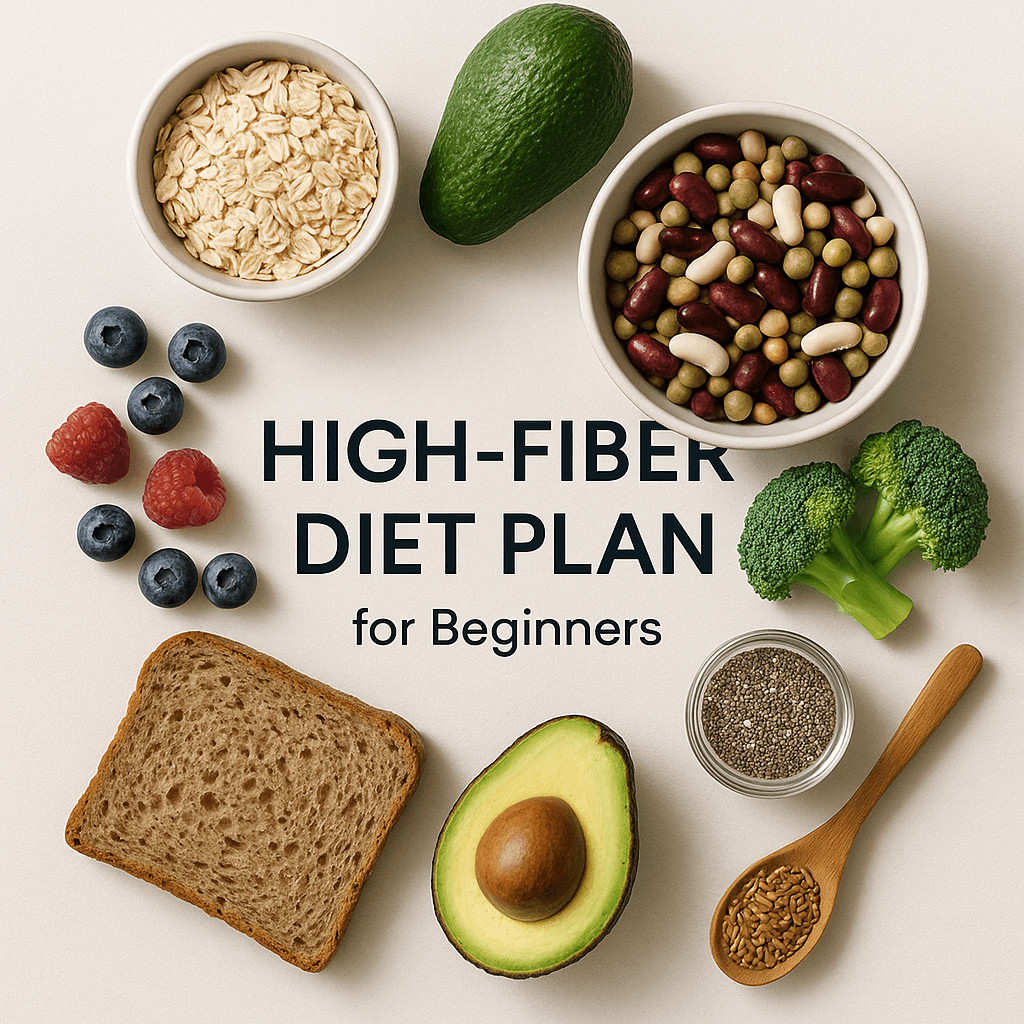
This guide will walk you through a beginner-friendly high fiber diet plan you can actually follow, including daily targets, a gentle ramp-up schedule, meal ideas, and a full 7-day plan. No extreme rules, no weird foods, just realistic steps that support gut health.
Fiber is the part of plant foods your body can’t fully digest. Instead of being broken down like carbs or fats, fiber travels through your digestive system and does important work along the way.
There are two main types:
There’s also a third concept you’ll hear in gut health circles:
You don’t need to obsess over categories. For beginners, the goal is simple: eat a variety of fiber-rich plant foods consistently.
General guidelines (often cited in nutrition recommendations):
Most people fall well below that. If you’re currently eating a low-fiber diet, jumping straight to 30 to 40 grams overnight can cause gas, bloating, and cramping.
A better approach is to increase gradually while also increasing fluids.
If you’ve ever eaten a giant bowl of lentils and then regretted every life choice, you already understand this section.
When you increase fiber, your gut microbes start fermenting more of it, which can produce gas. That’s normal. The key is to ramp up slowly so your gut can adapt.
Also, drink more water. Fiber works best when it has enough fluid to move through the digestive tract.
You don’t need to live on bran cereal. Here are easy staples that work in normal meals:
Beginner tip: start with smaller portions like ¼ to ½ cup, then work up.
Even adding 1 tablespoon of chia or ground flax can bump your day up nicely.
If tracking grams feels annoying, use this structure instead:
At most meals, aim for:
Do that most days, and your fiber intake will rise naturally.
This plan is designed to be gut-friendly and doable. Portions depend on your needs, so treat this as a template and adjust.
Breakfast: Oatmeal cooked with milk or soy milk + chia seeds + blueberries
Lunch: Turkey or tofu whole grain sandwich + side salad (olive oil + lemon)
Snack: Apple + handful of almonds
Dinner: Salmon or tempeh + roasted sweet potato (skin on) + green beans
Breakfast: Greek yogurt or coconut yogurt + raspberries + ground flax + granola (look for whole grain)
Lunch: Lentil soup + whole grain toast
Snack: Carrot sticks + hummus
Dinner: Chicken or chickpea stir-fry + brown rice + mixed veggies
Breakfast: Smoothie (spinach + banana + peanut butter) + add 1 tbsp chia
Lunch: Quinoa bowl with black beans, corn, peppers, salsa, avocado
Snack: Orange + walnuts
Dinner: Whole wheat pasta with marinara + sautéed mushrooms + side salad
Breakfast: Avocado toast on whole grain bread + kiwi
Lunch: Chickpea salad wrap (chickpeas, cucumber, herbs, olive oil, lemon)
Snack: Pear + pumpkin seeds
Dinner: Baked potato (skin on) + cottage cheese or beans + steamed broccoli
Breakfast: Overnight oats with berries + flax
Lunch: Leftover potato bowl or bean bowl + greens
Snack: Edamame (frozen, steamed)
Dinner: Taco night: corn or whole wheat tortillas + pinto beans + lettuce + tomato + avocado
Breakfast: High-fiber cereal (check label) + milk + sliced banana
Lunch: Vegetable and barley soup + side of fruit
Snack: Hummus + whole grain crackers
Dinner: Sheet pan meal: chicken or tofu + Brussels sprouts + carrots + quinoa
Breakfast: Oat pancakes (or whole grain toast) + berries
Lunch: Big salad with mixed greens, chickpeas, chopped veggies, seeds, olive oil dressing
Snack: Apple or berries + yogurt
Dinner: Lentil curry + brown rice + spinach
If you’re currently low fiber, you can make this even gentler by reducing legumes at first and leaning more on oats, berries, cooked vegetables, and whole grains.
You only need a few “go-to” meals to make this work.
If you’re doing this for gut health, comfort matters. Here are the simplest ways to make high fiber feel better:
If you have IBS or you’re sensitive to certain fibers (like some fermentable carbs), you may need a more personalized approach. A gut-focused dietitian can help you increase fiber without triggering symptoms.
Whole grains
Legumes
Fruits
Vegetables
Boosters
Most people experience benefits like better bowel regularity and steadier hunger within a couple of weeks after increasing their fiber intake, but there are exceptions.
Consider getting medical advice if you have:
Also, if constipation is severe, adding fiber without enough water (or without addressing underlying issues) can sometimes make things worse.
A high fiber diet for beginners works best when it’s simple and gradual: build meals around whole grains, legumes, fruits, vegetables, and a few small fiber boosters like chia or flax. Aim for steady progress, not perfection, and give your gut a week or two to adapt.
If you want the easiest starting move: eat oatmeal with chia and berries for breakfast, add one bean-based meal a day, and include a fruit or veggie at every meal. That alone can change your gut health more than most supplements ever will.
However, if you find yourself struggling with persistent bloating despite these changes, it may be time to reassess your approach or seek professional guidance.
Dietary fiber is the part of plant foods that your body can’t fully digest. Instead of being broken down like carbs or fats, fiber travels through your digestive system and supports good gut microbes, promotes regular bowel movements, and helps keep blood sugar and appetite steady throughout the day.
There are two main types of dietary fiber: soluble fiber, which mixes with water to form a gel-like texture helping with stool consistency and supporting healthy blood sugar and cholesterol levels (found in oats, chia, beans, apples); and insoluble fiber, which adds bulk to stool and aids digestion (found in whole grains, nuts, leafy greens). Additionally, prebiotic fibers feed beneficial gut bacteria and are found in foods like onions, garlic, leeks, asparagus, and legumes.
General recommendations suggest women aim for about 25 grams of fiber per day and men about 38 grams. After age 50, needs may be slightly lower—around 21 grams for women and 30 grams for men. It’s important to increase fiber intake gradually if currently low to avoid digestive discomfort.
Increasing fiber too quickly can cause gas, bloating, and cramping because your gut microbes ferment the fiber producing gas. A gentle ramp-up over 7 to 14 days—adding about 5 grams every few days while drinking more water—helps your gut adapt comfortably.
Easy high-fiber staples include oats or oatmeal; whole wheat bread with at least 3 grams of fiber per slice; brown rice; legumes like lentils and chickpeas (start with small portions); fruits such as raspberries, pears, apples with skin; vegetables like broccoli, carrots, spinach; plus seeds and nuts like chia seeds or almonds.
Yes! For most meals, aim for one fiber-rich base such as oats or legumes; two different plants like vegetables or fruits; and one small fiber booster such as chia seeds, flaxseed, nuts or beans. Following this formula regularly will naturally increase your daily fiber intake without the need for precise tracking.