Physical Address
304 North Cardinal St.
Dorchester Center, MA 02124
Physical Address
304 North Cardinal St.
Dorchester Center, MA 02124

But here’s the part many people miss: probiotics are only half the story.
Your gut bacteria also need to be fed. And that’s exactly what prebiotics do.
Prebiotics are certain types of fiber (and a few other natural compounds) that your body doesn’t digest. Instead, they travel to your colon, where your beneficial microbes ferment them and turn them into helpful substances, including short-chain fatty acids like butyrate. Those compounds support the gut lining, help regulate inflammation, and can influence digestion, mood, and metabolism.
In simple terms:
Probiotics are the “seeds.” Prebiotics are the “fertilizer.”
This guide will walk you through the best prebiotic foods you can realistically eat every day, how to combine them, and how to avoid the common mistake that makes people feel gassy and bloated when they “suddenly eat more fiber.”
A food is considered “prebiotic” when it contains fibers or compounds that are selectively used by beneficial gut microbes.
The most well-known prebiotic types include:
A lot of plant foods contain some prebiotic fiber, but the foods below tend to be especially helpful and easy to build into daily meals.
You don’t need to eat all of these every day. Aim for 3 to 6 prebiotic foods across the day, and rotate them through the week so your gut microbes get variety.
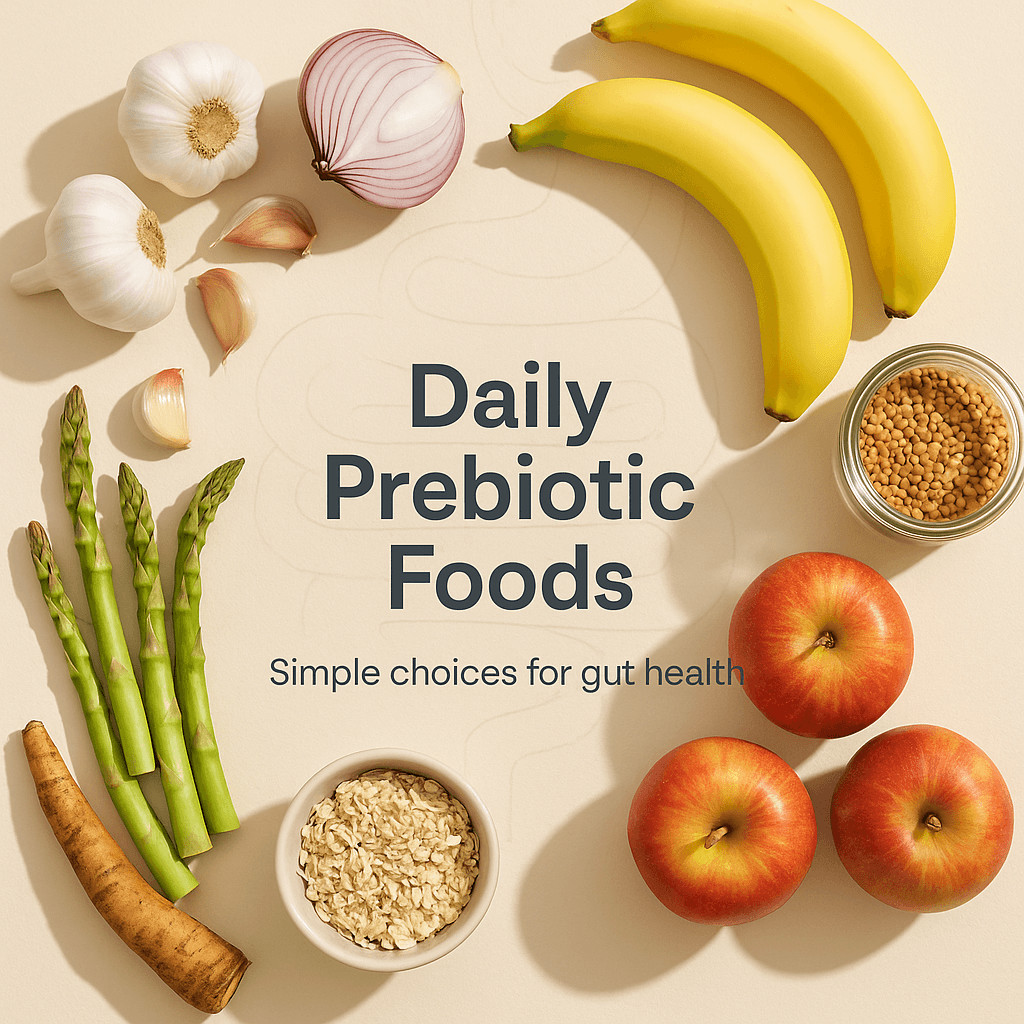
Onions are one of the most underrated gut health foods. They’re rich in inulin and FOS, which many beneficial bacteria love.
Easy daily ways to eat them:
Tip: If raw onion feels too strong, cooked onion still provides prebiotic benefits and is usually easier on digestion.
Garlic is another all-star for gut support. It provides inulin and FOS and pairs well with almost any savory meal.
Easy daily ways to eat it:
If onions and garlic trigger bloating for you, leeks and spring onions are often better tolerated while still being rich in prebiotic fibers.
Easy daily ways to eat them:
Asparagus contains inulin and has a nice “gentle fiber” feel for many people.
Easy daily ways to eat it:
Oats are rich in beta-glucan, a type of fiber linked with gut health and healthy cholesterol levels. They also tend to be very easy to eat consistently, which is why they’re a great daily staple.
Easy daily ways to eat them:
Gut-friendly pairing: Oats + berries is a simple combo that feeds a wider range of microbes.
Legumes provide GOS and other fermentable fibers that support a diverse microbiome. They’re also one of the most evidence-backed foods for long-term gut health.
Easy daily ways to eat them:
If legumes make you gassy: start with smaller portions (like 2 to 3 tablespoons), choose canned beans (rinse well), and increase slowly.
When bananas are less ripe, they contain more resistant starch, which acts as a prebiotic. As bananas ripen, resistant starch turns into more digestible sugars.
Easy daily ways to eat them:
Here’s a simple trick that feels almost too easy: when you cook starchy foods like potatoes or rice and then cool them, some of the starch changes into resistant starch.
That resistant starch can feed beneficial gut bacteria.
Easy daily ways to eat them:
Good to know: You can reheat them too. The resistant starch doesn’t vanish the moment you warm them back up.
Apples contain pectin, a fiber that supports beneficial microbes and digestion.
Easy daily ways to eat them:
If you’re choosing between apple juice and a whole apple, the whole apple wins for gut health almost every time.
Berries are not only fiber-rich, they also contain polyphenols that interact with gut microbes in helpful ways. Think of them as both a fiber source and a microbiome-friendly “plant compound” boost.
Easy daily ways to eat them:
These are small but powerful. They provide fiber that supports regularity and acts as a prebiotic for some gut bacteria.
Easy daily ways to eat them:
Tip: Ground flax tends to be easier to digest than whole flax.
Barley is another excellent source of beta-glucan, similar to oats, and works well in soups and grain bowls.
Easy daily ways to eat it:
These are some of the richest natural sources of inulin. They can be amazing for the microbiome, but they are also famous for causing gas if you eat too much too soon.
How to use them:
If your gut is already reactive, build tolerance with gentler options first (like oats, berries, and small portions of legumes).
Prebiotics are healthy, but if your gut isn’t used to them, the bacteria fermentation can produce gas. That’s not necessarily “bad,” but it can be uncomfortable.
A better approach is:
If you’re currently eating very little fiber, going from “almost none” to “a big bowl of beans plus raw onions” is basically a recipe for bloating.
Slow and steady wins here.
There’s no perfect number that fits everyone, but a practical target is:
If you do that consistently, your gut microbes get a steady supply of fermentable fiber without you needing to micromanage grams.
If you want this to be effortless, use a few repeatable combos.
Great for breakfast and very gut-friendly.
Add olive oil and a cooked vegetable for a balanced meal.
This is a simple “feed the bacteria you’re adding” strategy.
Add eggs or tofu and you have a fast lunch.
Most people benefit from more prebiotic foods, but there are a few situations where you should be extra thoughtful:
If you’re not sure, start with gentler foods (oats, berries, chia, cooked vegetables) and track how you feel.
If you want a realistic routine, here’s one that works for many people:
No fancy supplements needed. Just consistent, fiber-rich whole foods.
If you’re serious about gut health, prebiotics deserve a daily spot on your plate. They help your beneficial bacteria thrive, support the gut lining, and improve regularity and overall digestive balance over time.
If you want the easiest place to start, pick two daily staples:
Then add in legumes, berries, apples, and resistant starch foods as your routine becomes easier.
Your gut microbiome responds best to one thing: consistency. Eat these foods daily, build up slowly, and give it a few weeks. That’s when most people start noticing the difference.
Prebiotics are certain types of fiber and natural compounds that your body doesn’t digest. Instead, they travel to your colon where beneficial gut microbes ferment them into helpful substances like short-chain fatty acids, including butyrate. These compounds support the gut lining, regulate inflammation, and influence digestion, mood, and metabolism.
Probiotics are the ‘good bacteria’ or ‘seeds’ that add beneficial microbes to your gut, found in foods like yogurt and kefir. Prebiotics act as the ‘fertilizer’ by feeding these good bacteria with fibers they can ferment, which helps them thrive and produce beneficial compounds for gut health.
Key prebiotic-rich foods include onions (red, white, yellow), garlic, leeks, spring onions, asparagus, oats (especially rolled oats), legumes like lentils and chickpeas, and slightly green bananas or plantains. These contain fibers such as inulin, fructooligosaccharides (FOS), galactooligosaccharides (GOS), resistant starch, beta-glucans, and pectin that feed beneficial gut microbes.
Aim to eat 3 to 6 different prebiotic foods throughout the day and rotate them during the week for microbial variety. Start with small portions of gas-inducing foods like legumes (2-3 tablespoons) and increase gradually. Cooking methods such as sautéing onions or using cooked rather than raw forms can also ease digestion.
You can add chopped onions to eggs or soups; mix minced garlic into stir-fries or sauces; include leeks in stews; roast asparagus with olive oil; enjoy oats as overnight oats or oatmeal; add lentils to curries; use chickpeas for hummus; and eat slightly green bananas as a snack or in smoothies.
Resistant starch is a type of prebiotic fiber that escapes digestion in the small intestine and ferments in the colon, producing beneficial short-chain fatty acids that support gut health. Foods high in resistant starch include cooked-and-cooled potatoes or rice and slightly green bananas or plantains.