Physical Address
304 North Cardinal St.
Dorchester Center, MA 02124
Physical Address
304 North Cardinal St.
Dorchester Center, MA 02124

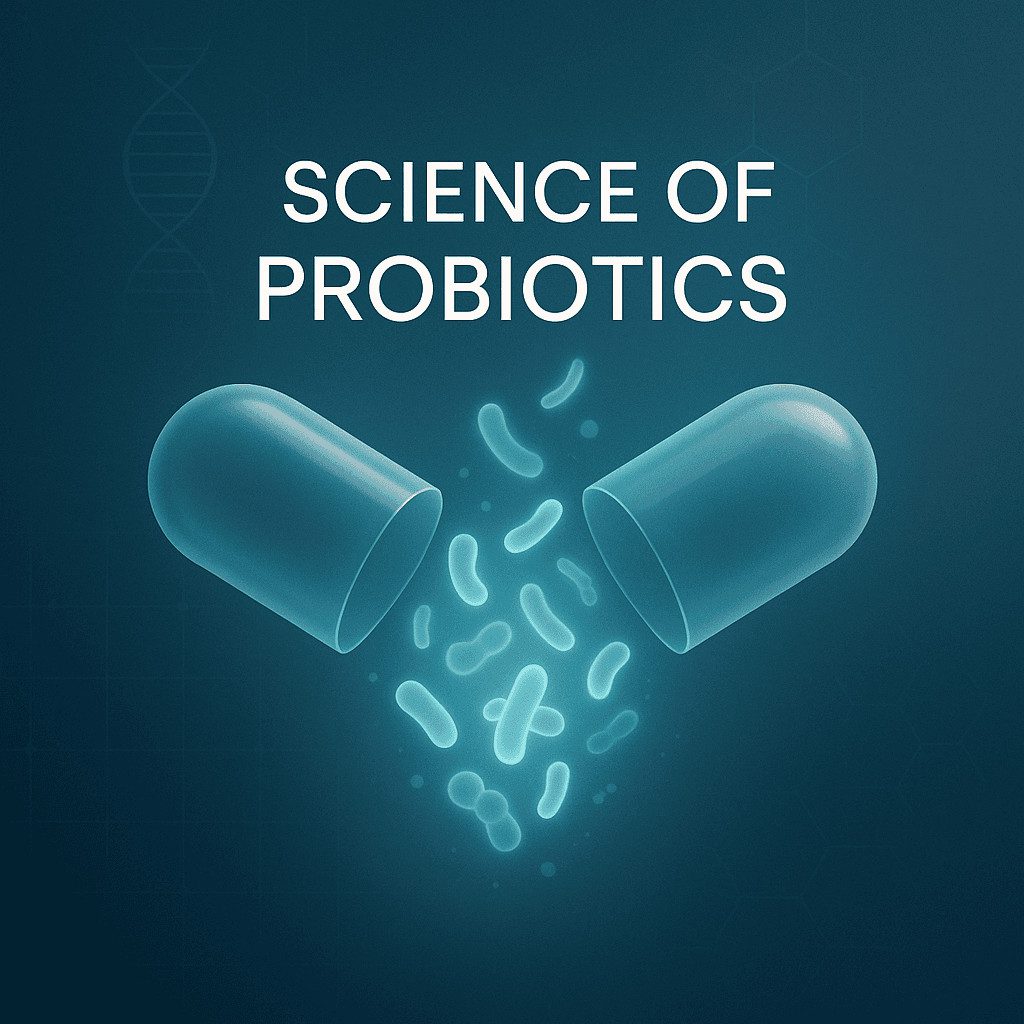
Probiotics are not random “good bacteria.” They are specific strains of live microorganisms that, in the right amounts, can support specific health outcomes. That last part matters because the science of probiotics is all about details: which strain, at what dose, for which goal, in which person.
Let’s break down what probiotics actually do inside your body, what the research really shows, and how to choose one that makes sense for your gut.
Probiotics are live microorganisms, usually bacteria (and sometimes yeasts), that can provide a health benefit when consumed in adequate amounts.
You’ll most commonly see these types:
Probiotics are not the same thing as:
A yogurt can be great. It just might not be the same as a probiotic capsule that was tested for a specific condition.
Your digestive tract is home to a huge microbial community. These microbes help with:
When this ecosystem is disrupted, sometimes called dysbiosis, people may experience symptoms like gas, bloating, irregular stools, or increased sensitivity. Dysbiosis is not one single pattern, and it doesn’t always cause symptoms, which is why probiotics can help some people a lot and others not much.
The key is that probiotics don’t usually “take over” your gut permanently. For most people, they act more like temporary visitors that can influence the environment while you’re taking them.
Probiotics can support gut health through a few big, well-studied pathways. Different strains lean on different mechanisms.
Some probiotic strains can:
This is one reason probiotics are often discussed after antibiotics or during certain types of diarrhea. Not because they “rebuild your microbiome overnight,” but because they can help stabilize the environment while your system recovers.
Your intestinal lining is meant to be selectively permeable: absorb nutrients, keep irritants out. When the barrier is stressed, the immune system may react more strongly, sometimes contributing to inflammation and GI symptoms.
Certain probiotics may help by:
This doesn’t mean probiotics “heal leaky gut” in a universal way, but it does mean some strains can support barrier function in measurable ways in certain contexts.
A large portion of your immune system sits right along your gut. Probiotics can interact with immune cells and help shift immune signaling.
Depending on the strain, probiotics may help:
This is one reason probiotics are sometimes studied for allergy-related conditions and certain inflammatory patterns, although results vary by strain and population.
Some probiotics can produce or encourage production of:
Not every probiotic is a major SCFA producer, but some strains help create conditions where your native microbes can do that job better.
Some strains appear to influence:
This is why certain probiotics are researched for IBS symptoms. Importantly, not all IBS is the same, and not all probiotics help IBS.
One of the biggest misunderstandings is thinking probiotics work like vitamins.
With probiotics, the strain is like the active ingredient. The label should ideally include something like:
Those letters and numbers are not marketing fluff. They identify the exact strain used in research.
Two products can both say “Lactobacillus rhamnosus” and still act differently if the strains are different.
Probiotics have real evidence in some areas, and weaker or inconsistent evidence in others. Here are a few of the most commonly discussed categories.
This is one of the most established uses. Antibiotics can disrupt the gut ecosystem and increase diarrhea risk. Certain probiotics, including Saccharomyces boulardii and some Lactobacillus strains, have evidence supporting reduced risk of antibiotic-associated diarrhea in some populations.
Important note: probiotics are not appropriate for everyone, especially certain immunocompromised individuals, and timing matters. If you take a probiotic at the same time as an antibiotic, you may want to separate them by a few hours to reduce the chance the antibiotic simply kills the bacteria.
Some strains show benefit for shortening duration or reducing risk, but results depend heavily on the cause, region, and population. This is not a “take any probiotic and you’re protected” situation, but certain strains do show promising results.
This area is popular and complicated.
Some people with IBS do well with specific probiotics, while others notice no change or even feel worse (usually temporarily, due to changes in fermentation and gas).
The evidence suggests probiotics may help some IBS symptoms, but it’s inconsistent because:
If you’re dealing with IBS, strain selection and a careful trial period matter more than buying the highest CFU product.
Some Bifidobacterium and Lactobacillus strains have evidence for improving stool frequency and consistency in certain groups. Again, this is strain-specific and not guaranteed.
Certain Lactobacillus strains are studied for supporting a vaginal microbiome dominated by Lactobacilli, which is generally associated with resilience against bacterial vaginosis and yeast imbalance. Oral vs. vaginal delivery and strain selection matter a lot here.
Some probiotics are associated with modest reductions in duration or incidence of certain upper respiratory infections in some studies. Think “small nudge,” not “immunity superpower.”
CFU stands for colony-forming units, a rough measure of viable microbes.
A common assumption is that the highest CFU is best. In reality:
Also, CFUs should ideally be guaranteed through the end of shelf life, not just “at the time of manufacture.” That difference is huge.
For a probiotic to do anything, it has to survive the trip.
Barriers include:
That’s why you’ll see technologies like:
Some strains are naturally more robust than others. Saccharomyces boulardii, as a yeast, is notably resilient and also unaffected by antibacterial antibiotics.
They can both be helpful, but they serve different purposes.
Fermented foods like yogurt, kefir, kimchi, and sauerkraut can:
But fermented foods vary a lot by brand, storage, and processing. They often do not provide a consistent, researched strain at a known dose.
Probiotic supplements are better when you want:
For many people, the best foundation is still the boring stuff: fiber, plant variety, sleep, stress management, and regular meals. Probiotics can be a tool, not the whole plan.
This surprises people, but it’s common.
In the first few days, you might notice:
Often, this settles as your gut adjusts. If symptoms are intense or persist beyond a couple of weeks, that strain may not be a good fit for you, or the dose may be too high to start.
A practical approach is to:
Most healthy people tolerate probiotics well, but there are important exceptions.
Talk to a clinician before using probiotics if you:
These situations can increase the rare risk of probiotic-related infections.
Also, if you have persistent GI symptoms, probiotics should not delay evaluation for conditions like celiac disease, IBD, infections, or thyroid issues.
If you want to do this in a science-aligned way, here’s what to look for.
“Gut health” is vague. Choose one:
Different goals point to different strains.
Not just the species. You want the full name with the strain code when possible.
Look for:
For many goals, 2 to 4 weeks is a reasonable test. Some situations (like antibiotic-associated diarrhea prevention) are more time-specific.
If you change five things at once, you’ll never know what helped.
Try to keep diet and supplements stable while you test a probiotic. If you do want to improve diet alongside it, focus on one simple win like adding one fiber-rich food daily.
The most reliable way to support a healthier microbiome long term is still the stuff that builds a stable ecosystem:
Probiotics can support that foundation, especially in specific situations. But they rarely override a low-fiber diet, chronic stress, or poor sleep.
The science behind probiotics is strong in one clear way: they can help, but only when the match is right.
Probiotics work through practical mechanisms like competing with unwanted microbes, supporting the gut barrier, shaping immune signals, and influencing gut motility. But outcomes depend on the exact strain, dose, and the person taking it.
If you remember just one thing, make it this: shop by strain and goal, not by hype and CFUs.
And if you want SolidHealthinfo to help you choose more specifically, a good next step is to share your main symptom (bloating, constipation, diarrhea, post-antibiotics, IBS pattern) and what you’ve already tried. That context is where probiotics become truly useful.
Probiotics are live microorganisms, mainly specific strains of bacteria or yeasts, that provide health benefits when consumed in adequate amounts. They differ from prebiotics, which are fibers that feed gut microbes; postbiotics, which are beneficial compounds produced by microbes; and fermented foods, which may contain beneficial microbes but don’t always have the specific strains or doses studied in clinical trials.
Probiotics act as temporary visitors in the gut ecosystem, influencing the balance of microbes by competing with unwanted bacteria for space and nutrients, supporting the gut barrier integrity, modulating immune responses, producing beneficial compounds like short-chain fatty acids, and affecting gut motility and sensitivity. This interaction helps maintain a balanced gut environment and can alleviate symptoms related to dysbiosis.
The probiotic strain is crucial because different strains within the same species can have distinct effects on health. Scientific research identifies benefits linked to exact strains (e.g., Lactobacillus rhamnosus GG), not just species names. Therefore, choosing probiotics based on well-studied strains ensures targeted and effective health outcomes rather than relying on brand names alone.
Probiotics support gut health primarily by: 1) competing with harmful microbes for resources and space; 2) strengthening the intestinal barrier by enhancing mucus production and tight junction integrity; 3) modulating immune system activity to reduce inflammation; 4) producing or promoting production of beneficial substances like short-chain fatty acids; and 5) influencing gut motility and sensitivity to alleviate symptoms such as bloating.
Generally, probiotics do not permanently colonize or take over your gut microbiome. Instead, they act as temporary visitors that influence your gut environment while you take them. Their benefits often depend on continued consumption and may vary between individuals due to differences in existing microbial communities and personal health conditions.
Choosing an effective probiotic involves considering the exact strain(s) supported by scientific research for your particular condition or goal, ensuring an adequate dose as studied in clinical trials, and matching it to your individual health profile. Consulting healthcare professionals and reviewing product labels for strain identifiers (like Lactobacillus rhamnosus GG) can help select a probiotic tailored to your needs.